

Why Your Business Needs a Monthly Bookkeeping Routine
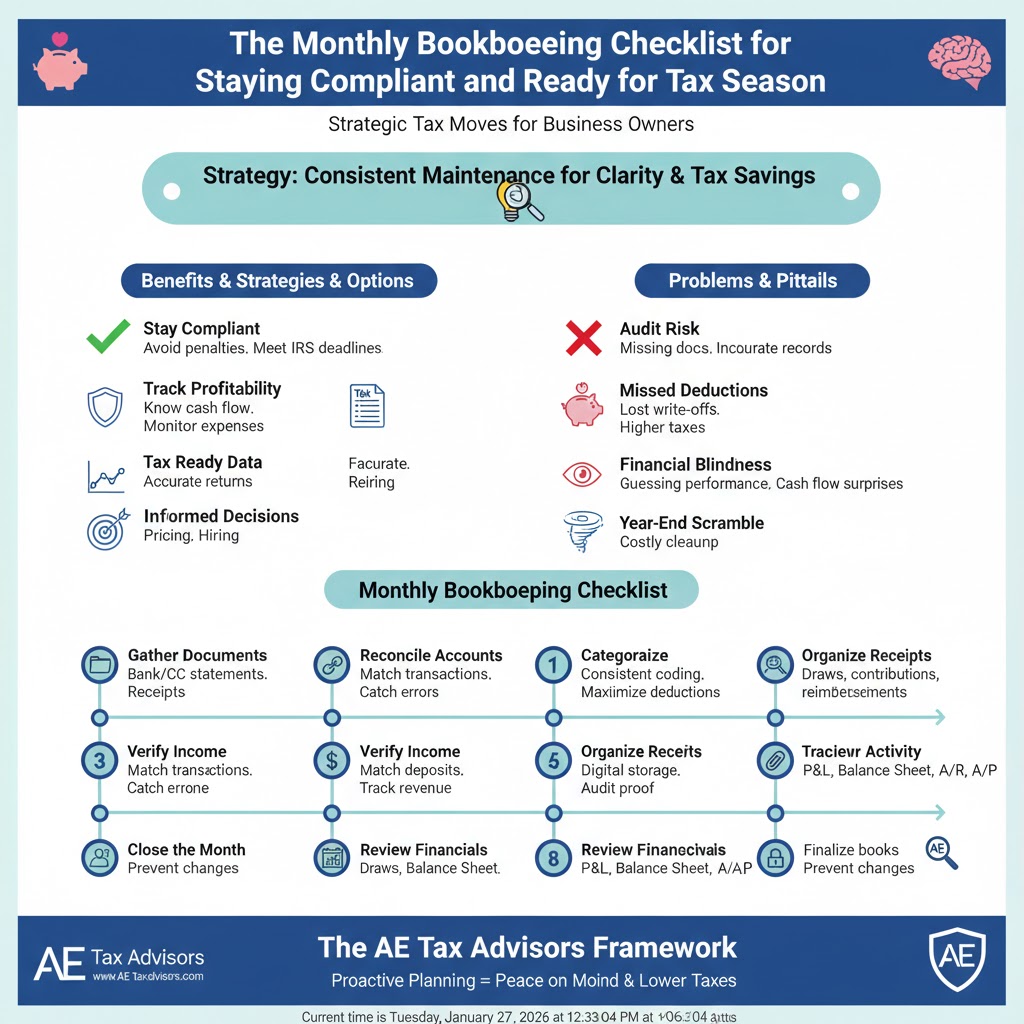
When it comes to monthly bookkeeping checklist for staying, understanding the fundamentals is key. Most business owners wait until tax season to look at their books, which creates stress and leads to missed deductions, inaccurate numbers, and costly mistakes. The solution is simple. A monthly bookkeeping checklist keeps your financials accurate, organized, and tax ready. It gives you clarity all year so your CPA has the data needed to build proactive strategies. This guide covers real estate bookkeeping and what it means for your tax situation.
A monthly routine prevents surprises and turns your bookkeeping into a powerful part of your business rather than a year end scramble.
The Impact of Monthly Financial Maintenance
When your books are updated monthly, your tax projections become more accurate, your financial decisions become clearer, and your business becomes easier to manage. You know your profit, your cash flow, your expenses, and your true financial position at all times.
Monthly bookkeeping helps you:
Stay compliant
Avoid costly IRS issues
Track profitability
Prepare for lending
Manage payroll
Keep personal and business spending separate
Catch errors early
Support long term tax planning
This checklist makes the process simple and repeatable.
Step One Gather All Financial Documents
Your monthly bookkeeping starts by collecting every statement and document that reflects activity in your business.
Gather:
Bank statements
Credit card statements
Loan statements
Merchant processor reports
Payroll reports
Receipts
Invoices
Expense summaries
Subscription invoices
Having everything in one place eliminates the guesswork and makes reconciliation faster.
Step Two Reconcile Bank and Credit Card Accounts
Reconciliation is the cornerstone of clean books. It ensures your financial records match your real world accounts.
During reconciliation you verify:
Every deposit matches income
Every withdrawal matches an expense
No transactions are missing
No duplicates exist
No incorrect categorizations remain
This step keeps your books accurate and prevents errors from building up over time.
Step Three Review and Categorize Every Transaction
Proper categorization is essential for accurate reporting and maximum tax savings. Categories must be consistent month after month. This allows your CPA to analyze trends, identify tax opportunities, and build projections.
Update categories for:
Advertising
Contract labor
Payroll
Insurance
Rent
Supplies
Utilities
Professional services
Meals
Travel
Subscriptions
The goal is to ensure every transaction reflects the true nature of the expense.
Step Four Verify Income and Match Deposits
Many businesses have income from multiple sources like Stripe, PayPal, Square, or ACH deposits. Monthly bookkeeping ensures these are tracked correctly.
You should:
Match every deposit to an invoice or sale
Check for missing payments
Ensure revenue is categorized consistently
Look for failed or reversed transactions
Accurate income tracking directly affects both financial clarity and tax reporting.
Step Five Record and Organize Receipts
Digital recordkeeping makes documentation simple. Every expense should have a matching receipt stored in a system that is easy to access.
Use tools like:
QuickBooks receipt capture
Google Drive
Dropbox
Expensify
Hubdoc
Proper documentation protects you during any audit and helps support every deduction your business claims.
Step Six Track and Separate Owner Activity
Business owners often mix personal and business expenses without realizing it. Your monthly checklist prevents confusion and ensures your tax planning stays accurate.
Each month review:
Owner draws
Owner contributions
Owner reimbursements
Personal expenses accidentally paid with business funds
Clean tracking keeps your books compliant and protects your entity structure.
Step Seven Update Accounts Payable and Accounts Receivable
Accounts payable is money your business owes. Accounts receivable is money owed to you. Tracking both keeps your business stable and helps you forecast cash flow.
Update:
Outstanding invoices
Upcoming bills
Vendor payments
Customer balances
Aging reports
This gives you a clear financial picture going into the next month.
Step Eight Review Payroll and Contractor Payments
Payroll affects taxes, compliance, and financial reporting. Your monthly checklist ensures payroll data matches your books.
Verify:
Employee wages
Contractor payments
Taxes withheld
Payroll fees
Reimbursements
Bonuses
Adjustments
Correct payroll records make tax filings easier and prevent expensive errors.
Step Nine Review Loan Balances and Interest
If your business has loans, lines of credit, or financing, your books must show accurate balances and payments.
Each month confirm:
Principal paid
Interest paid
Fees charged
Current balance
New financing if applicable
Clean loan tracking improves financial reporting and supports future lending.
Step Ten Review Your Profit and Loss Statement
Your profit and loss statement shows revenue, expenses, and net profit. Reviewing it monthly helps you see how your business is performing and where you can improve.
Check for:
Unexpected expenses
Spikes in spending
Declining revenue
High margin categories
Trends in profitability
Use this information to adjust pricing, spending, or strategy.
Step Eleven Review Your Balance Sheet
Your balance sheet is a snapshot of your financial health. Reviewing it monthly ensures accuracy in assets, liabilities, and equity.
Review:
Bank balances
Loan balances
Credit card balances
Owner equity
Accounts receivable
Accounts payable
This keeps the foundation of your financials strong.
Step Twelve Prepare for Taxes All Year
The biggest advantage of monthly bookkeeping is staying ahead of taxes. When you know your numbers all year, you avoid the stress and cost of last minute cleanup.
Monthly preparation helps with:
Quarterly tax estimates
Payroll adjustments
Deduction tracking
Depreciation updates
Strategy planning
Entity structure decisions
Your CPA can only do proactive planning when your books stay up to date.
Step Thirteen Close the Books Properly
Closing the books means finalizing each month so you can move forward confidently. Once the books are closed, the numbers should not change.
A formal close brings clarity, consistency, and confidence in your real financial position.
Final Thoughts
A monthly bookkeeping checklist gives you structure and keeps your financials clean all year. With consistent updates, accurate reporting, and organized documentation, your business stays compliant, tax ready, and positioned for long term success. Clean books give you clarity. Clarity gives you control. And control leads to better decisions and lower taxes.
Understanding real estate bookkeeping is essential for maximizing your tax savings as a real estate investor.
When it comes to real estate bookkeeping, working with a specialized tax advisor makes all the difference.
Many investors overlook real estate bookkeeping, but it can be one of the most impactful strategies in your tax plan.
At AE Tax Advisors, we help clients navigate real estate bookkeeping to keep more of what they earn.
Real estate bookkeeping is one of the most important concepts for real estate investors to understand. When properly implemented, real estate bookkeeping can lead to significant tax savings that compound over time.
Many high-income earners miss out on real estate bookkeeping opportunities simply because their CPA lacks the specialized knowledge. A proactive approach to real estate bookkeeping can mean the difference between overpaying and optimizing your tax position.
Understanding Real estate bookkeeping
Related services from AE Tax Advisors: S-Corp and real estate coordination and long-term rental tax planning.
Real estate bookkeeping is a critical component of any comprehensive tax strategy for real estate investors. At AE Tax Advisors, we help clients navigate real estate bookkeeping to maximize their tax savings while maintaining full IRS compliance. Our proactive approach ensures you capture every available deduction and credit.
For more information, refer to the IRS.